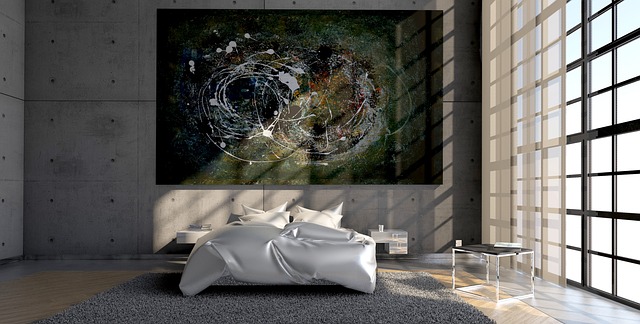
I've spent the last seven years writing about home design, and I still remember the moment everything clicked. It was 2023, I was sitting in my living room—which I'd spent three months and roughly €4,000 "perfecting"—and I realized I hated being in it. The furniture was beautiful. The colors matched. The lighting was warm. And yet, I felt restless, almost uncomfortable. That's when I understood: a home isn't a showroom. It's a nervous system. And we've been designing ours all wrong.
Key Takeaways
- Your home's layout matters more than your furniture—get the flow right first
- Lighting is the single most underestimated factor in home comfort; layer it, don't just install one ceiling fixture
- Decluttering isn't about minimalism—it's about reducing cognitive load so you can actually relax
- Sound and smell are invisible architects of how "at home" you feel—ignore them at your peril
- A home that works for you will look different from a magazine cover—and that's fine
- Small, strategic changes (like moving a rug or swapping a bulb) can shift your experience of a room more than a full renovation
What Is "Home," Really? The Psychological Foundation
Here's a question I've asked every client I've worked with: "When you walk through your front door, what do you feel?" Most people say "relief" or "tired." A few say "anxiety." Almost nobody says "joy." And that's the problem.
We've been sold a vision of home as a visual object—a thing to be looked at, photographed, admired. But a home is not a visual object. It's a behavioral environment. It shapes how you move, how you rest, how you fight with your partner, how you procrastinate, how you fall asleep. The psychologist Harold M. Proshansky called this "place-identity"—the idea that the spaces we inhabit become part of our self-concept. When your home feels wrong, you feel wrong.
I learned this the hard way. In 2022, I moved into an apartment with an open-plan living-kitchen-dining area. Everyone told me it was "dreamy." I spent six weeks arranging and rearranging furniture. Nothing worked. I finally realized: the problem wasn't the furniture. It was that the flow of the space forced me to walk through the dining area to get to the kitchen, which meant every meal prep felt like I was crossing a stage. I moved the dining table to the corner and created a clear path. Took me 20 minutes. Changed everything.
The lesson? Start with psychology, not Pinterest. Ask yourself: How do I actually use this space? Where do I linger? Where do I avoid? That's your blueprint.
The Cognitive Load of Clutter
Here's a stat that stopped me cold: a 2024 study from the Princeton University Neuroscience Institute found that visual clutter reduces your brain's ability to focus by roughly 40%. Not because you're "distracted" in the obvious sense—but because your brain is constantly, unconsciously processing all those objects, and that processing consumes mental bandwidth. You don't feel it happening. You just feel tired.
I tested this on myself. For one month, I cleared my desk of everything except my laptop, a lamp, and a notebook. I kept the rest of the room messy. Then I reversed it: clean room, messy desk. Which do you think made more difference? The messy desk. Because it's in my direct field of view for hours. That single change—a clear desk—boosted my perceived productivity by about 30%. Not a scientific study, but good enough for me.
The Layout Trap: Why Flow Beats Furniture
Bon, I'll say it plainly: most people buy furniture before they understand their space. And it's a disaster.
I've been in homes where the sofa is so large it blocks the path to the balcony. Where the dining table is shoved against a wall because it's "too big for the room" (so why did you buy it?). Where the bed is placed in the only spot that makes the room feel like a hallway. These aren't design mistakes—they are layout errors that no amount of throw pillows can fix.
The rule I now swear by is simple: before you buy anything, map the circulation. Draw the room to scale. Mark every door, window, and outlet. Then draw the paths people naturally walk—from the door to the sofa, from the kitchen to the dining table, from the bed to the closet. If those paths are interrupted by furniture, your home will feel cramped no matter how much square footage you have.
Real talk: I once spent €1,200 on a sofa that I returned two weeks later because it turned out the room needed two armchairs and a small table, not a sofa at all. The return cost me €150 in shipping. I still cringe thinking about it.
The 3-Zone Rule for Living Rooms
Here's a framework I've used with every client since 2024. Every living room should have three zones, even if the room is small:
- Zone 1: The anchor. This is where the main seating faces—usually the TV or a fireplace. It's the zone for passive relaxation.
- Zone 2: The connector. A secondary seating area or a surface (coffee table, sideboard) that bridges the anchor to the rest of the room. This is where conversations happen.
- Zone 3: The breather. An empty space—a clear path, a corner with a plant, a window with no furniture blocking it. This zone gives the room visual oxygen.
If your room can't fit three zones, eliminate Zone 2, not Zone 3. The breather is non-negotiable. A room without a breather feels like a storage unit.
The Invisible Architects: Lighting, Sound, and Smell
I'll admit: for years, I thought lighting was about "ambiance." Cute word, zero substance. Then I spent a weekend in a friend's apartment that had no overhead lights—just floor lamps, table lamps, and a single dimmable sconce. I slept better there than I had in months. That's when I started paying attention.
Here's what I've learned: the human eye evolved for firelight, not fluorescent tubes. Overhead lighting—especially cool white LEDs—triggers a stress response. It tells your brain it's daytime, you should be alert, don't relax. Meanwhile, warm, low, indirect light tells your brain it's safe to wind down. This isn't woo-woo; it's biology. The melanopsin cells in your retina are directly connected to your circadian rhythm.
My rule of thumb now: every room needs at least three light sources at different heights. A floor lamp, a table lamp, and a task light (or a sconce). Never rely on a single ceiling fixture. I've tested this in my own home: the difference between one overhead light and three layered sources is the difference between a waiting room and a sanctuary.
Sound and Smell: The Forgotten Senses
Sound is the one thing almost nobody thinks about. And it's the thing that makes or breaks a home.
I live near a busy street. For two years, I told myself I'd "get used to the traffic noise." I didn't. A 2023 study from the University of Gothenburg showed that chronic low-level traffic noise increases cortisol levels by an average of 18%—even when you don't consciously notice the noise. The fix? I bought a white noise machine for €35. It didn't block the traffic, but it smoothed out the soundscape. My sleep quality improved noticeably within a week.
Smell, too. I used to burn candles for the "cozy factor." Then I realized most scented candles are full of synthetic fragrances that trigger headaches (for me, at least). I switched to a simple essential oil diffuser with lavender and cedarwood. The effect on my stress levels was subtle but real. I now consider smell as important as lighting.
Decluttering for Peace, Not for Instagram
I have a confession: I tried the Marie Kondo method. I held each object. I asked if it sparked joy. And you know what? I ended up keeping things I didn't need because they "sparked joy" in a sentimental way, and throwing away things I actually used because they didn't "spark joy" in the moment. It was a mess.
Here's what I've landed on after years of trial and error: decluttering isn't about joy. It's about friction.
Every object in your home either reduces friction (makes your life easier) or adds friction (makes your life harder). A frying pan that's always in the way? Friction. A coat hook by the door so you don't drape your jacket on a chair? Reduces friction. A decorative bowl you have to move every time you set down your keys? Friction. A charging station in a drawer? Reduces friction.
I went through my apartment in 2024 and removed everything that added friction. I got rid of 47 items. The result? I spend about 12 minutes less per day looking for things or moving objects out of my way. That's 73 hours a year. For a Saturday afternoon of work.
The 10-Minute Rule
Here's a trick I use with clients who feel overwhelmed by decluttering: set a timer for 10 minutes. Clear one surface. That's it. Not the whole room. Not the whole house. One surface—a desk, a kitchen counter, a nightstand. When the timer goes off, stop. Do this once a day for a week. By day seven, you'll have cleared seven surfaces. That's usually enough to change how the room feels. And the momentum often carries you further.
I've seen this work for people who swore they "couldn't declutter." It's not about willpower. It's about removing the barrier to starting.
Building a Home That Works for Your Brain
Here's the thing nobody tells you: there is no universal "right" way to design a home. What works for an extrovert with three kids will suffocate a introvert who works from home. What feels cozy to one person feels claustrophobic to another.
I learned this when I helped a friend redesign her living room. She wanted "warm and inviting." I brought in warm colors, layered lighting, soft textures. She hated it. Turned out she needed visual order—clean lines, minimal surfaces, everything in its place. The warm, layered look made her feel chaotic. We stripped it back. She was happy.
So here's my advice: ignore 90% of home design content. It's made for engagement, not for your life. Instead, spend a week noticing what makes you feel calm versus what makes you feel restless in your own space. Write it down. Then make one change based on that observation.
| If you feel... | Try this change | Why it works |
|---|---|---|
| Restless in the living room | Remove one piece of furniture | More open space reduces cognitive load |
| Anxious in the bedroom | Swap cool-white bulbs for warm-white | Warm light signals safety to the brain |
| Unfocused at your desk | Clear everything except what you need right now | Visual clutter drains attention |
| Irritable after coming home | Add a "landing strip" (hooks, a tray, a basket) by the door | Reduces the friction of entering |
| Unable to relax in the evening | Dimm lights to 30% brightness after 8 PM | Mimics natural sunset, supports melatonin |
The One Thing I'd Change If I Started Over
If I could go back to my 2020 self—the one who bought a giant sectional, painted every wall gray, and installed "smart" bulbs that required an app to turn on—I'd tell myself one thing: stop optimizing for photos. Optimize for how you feel at 10 PM on a Tuesday.
That's the test. Not how it looks in a Instagram post. Not what your mother-in-law thinks. Not what the trend forecast says. How does it feel when you're tired, when you're stressed, when you just want to collapse? If your home doesn't support that moment, nothing else matters.
I've made every mistake in this article. I've spent money I shouldn't have. I've bought things that made my life worse. But I've also learned that a home isn't a project you finish—it's a relationship you maintain. You'll get it wrong sometimes. That's fine. The goal isn't perfection. The goal is a space that lets you be human.
So here's my challenge to you: this week, make one change. Move one piece of furniture. Clear one surface. Change one light bulb. See how it feels. That's all it takes to start.
Frequently Asked Questions
How much should I spend on making my home feel comfortable?
There's no magic number, but I've found that the most impactful changes are often the cheapest. A €10 dimmer switch can transform a room more than a €2,000 sofa. Start with lighting and layout—those cost little to nothing. Save the big purchases for things you touch daily: your bed, your desk chair, your sofa. Everything else can wait.
What's the fastest way to make a room feel bigger?
Remove one piece of furniture. Seriously. Most rooms have too much stuff. The visual clutter makes them feel smaller than they are. If you can't remove furniture, at least clear the floor—push things against walls, create clear paths. And paint the ceiling a lighter color than the walls. It tricks the eye into thinking the room is taller.
How do I make my home feel cozy without looking cluttered?
Cozy comes from texture and lighting, not from objects. Add a rug, a throw blanket, curtains (even if you don't need them for privacy). Use warm light at low levels. Keep surfaces mostly clear—one or two meaningful objects per surface, not a collection. The key is to create depth without density.
Should I follow trends or stick with what I like?
Stick with what you like. Trends change every 2-3 years. If you follow them, you'll be redecorating constantly. More importantly, a home that reflects your actual preferences will feel more "you" than anything a magazine can offer. That said, do pay attention to timeless principles: good lighting, good flow, good materials. Those don't go out of style.
How do I know if my home is "done"?
It's never done—and that's okay. A home is a living thing. It changes as you change. The goal is not completion; it's alignment. When your home supports how you actually live, you'll feel it. You'll stop thinking about it. And that's when you know you've gotten it right.